
馬斯垂克大學
UM
Founded in 1976, Maastricht University is the youngest university in the Netherlands, yet it has already achieved a reputation for excellence for its academic programmes and learning methods. Maastricht University and its Faculties and Schools have become famous for their approach to learning and teaching. The Maastricht University School of Business and Economics (SBE) provides high-quality education to students and conducts excellent research, offering an international perspective in the fields of economics and international business administration.
Courses at UCM are taught using Problem-Based Learning (PBL). Using a combination of small-group work (no more than 12 students) and individual research, you seek possible solutions to the problem at hand and get feedback to help you refine your answers. All courses are taught in English.
The Maastricht University School of Business and Economics (SBE) provides high-quality education to students and conducts excellent research, offering an international perspective in the fields of economics and international business administration.
Internationally accredited and higly ranked
The educational quality of the School of Business and Economics (SBE) is recognised internationally. Its tripleAACSB, EQUIS and AMBA accreditation is granted to only 1%
of the business schools worldwide, meaning that the School is amongst a very select group of institutions, many of which are SBE partner universities. AACSB represents the highest standard of achievement for business schools worldwide and is granted by the Association to Advance Collegiate Schools of Business (AACSB). The European Quality Improvement System (EQUIS) is an international system of quality assessment and accreditation. Its fundamental objective is to raise the quality of management education.The AMBA accreditation is internationally recognised as the
global standard for all Masters of Business Administration (MBA), Doctorates in Business Administration (DBA) and Masters in Business and Management (MBM) programmes. SBE has also been awarded the ‘Distinctive (Quality) Feature for Internationalisation’ by the Accreditation Organisation of the Netherlands & Flanders (NVAO).
Problem-Based Learning (PBL)
Problem-Based Learning (PBL) offers you a different way of learning from traditional university education. You work in small tutorial groups, engage in hands-on training and attend(far) fewer lectures. Under the supervision of a tutor, you team up with ten to fifteen students to tackle real-life challenges. PBL is an active way of learning that gives you better retention of knowledge, enhances your motivation and
encourages you to develop skills that are essential for the labour market in the 21st century. In short: PBL is all about you, your tutors are very approachable and you learn together in a dynamic way, helping form you into an assertive professional.
What are these ‘skills for life’? Research shows that PBL teaches you to:
• really understand the subject matter, rather just learning by
rote
• collaborate with partners and small teams
• think critically with a view to solving problems
• study and work independently
• feel comfortable with public speaking
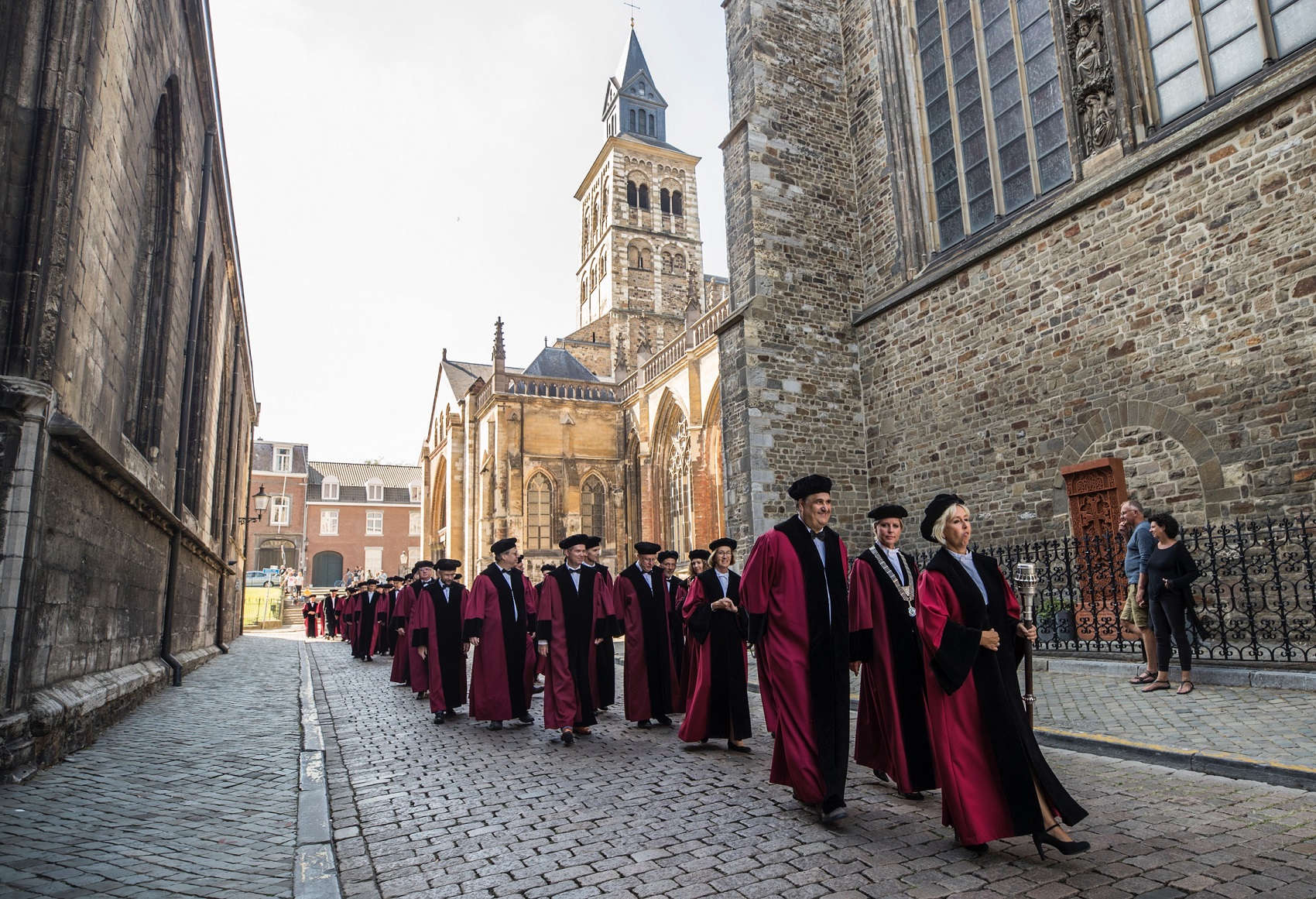
The Maastricht University virtual campus tour is a web-based guide to Maastricht University (UM) and the city of Maastricht. Use the interactive map to explore UM faculties and departments. See where students are taught, study and relax and get a taste of the city of Maastricht.
Click Campus Tour Maastricht University to start the virtual tour!
Surveys consistently show that the programmes of the Faculty of Psychology and Neuroscience of Maastricht University (FPN) rank among the highest in the Netherlands. Maastricht University and its Faculties and Schools have become famous for their approach to learning and teaching.
Our programmes have a very innovative curriculum. First, we use problem-based learning as main educational principle. Secondly, we focus on both cognitive and biological perspectives of the psychological processes. We emphasize these perspectives as we firmly believe that they offer the most attractive and fascinating avenues in Psychology today.
As a student at FPN you will benefit from small classes of only 12 to 14 students, close working relationships with your teachers and a highly interactive way of learning. Finally, we aim to provide an international environment for our student population. Each year we welcome and send students from/ to universities all over the world. The share of international students at our faculty is more than SO% and we look forward to adding you to our international classroom.